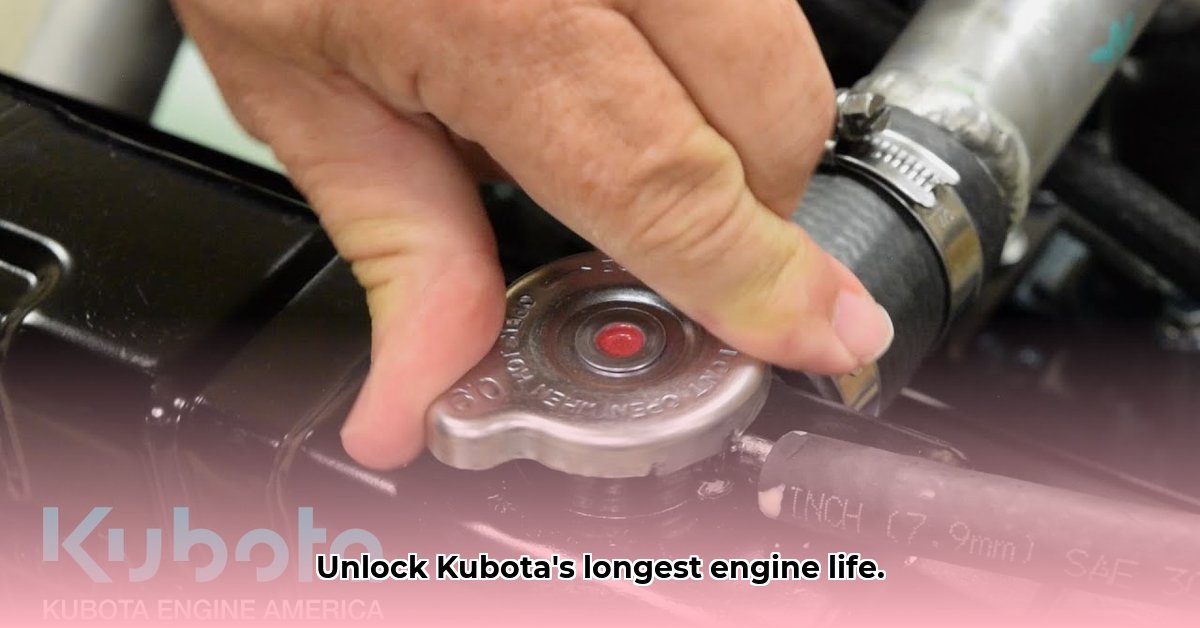
Choosing the right coolant for your Kubota tractor is crucial for engine longevity and preventing costly repairs. This guide provides a step-by-step approach to selecting and maintaining the optimal coolant for your specific tractor model. Understanding your engine type—wet-sleeved or dry-sleeved—is the first critical step. For more detailed information, see the Kubota tractor manuals.
Decoding Your Kubota Engine: Wet-Sleeved vs. Dry-Sleeved
Kubota tractors utilize two primary engine designs: wet-sleeved and dry-sleeved (also known as parent bore). This distinction significantly influences your coolant choice.
Wet-Sleeved Engines: In wet-sleeved engines, the cylinder liners are in direct contact with the coolant. This necessitates a coolant with supplemental coolant additives (SCAs) to mitigate cavitation (the formation of vapor bubbles that erode cylinder liners). Cavitation can lead to severe engine damage and expensive repairs.
Dry-Sleeved (Parent Bore) Engines: Dry-sleeved engines have cylinder liners not directly exposed to the coolant. While they might tolerate standard automotive antifreeze, using a coolant meeting SAE J1034 standards (see below) is still strongly recommended for optimal engine protection and performance.
Picking the Perfect Kubota Tractor Coolant
The following table summarizes coolant options, highlighting their benefits and drawbacks:
| Coolant Type | Cavitation Protection (Wet-Sleeved) | SCAs? | Cost | Maintenance | Environmental Impact | SAE J1034 Compliance |
|---|---|---|---|---|---|---|
| Standard Automotive Antifreeze | Low | No | Low | Low | Moderate | No |
| SAE J1034 Coolant with SCAs | High | Yes | Moderate | Moderate | Moderate to Low | Yes |
| Kubota Genuine Coolant | High | Yes | High | Moderate | Generally considered low | Yes |
Important Considerations:
- SCAs (Supplemental Coolant Additives): Essential for wet-sleeved engines to prevent cavitation.
- SAE J1034: This standard ensures a coolant's effectiveness in protecting against corrosion and cavitation. Meeting this standard is highly recommended, regardless of engine type.
Do you need to know the best way to protect your valuable Kubota tractor from costly repairs? The right coolant is key.
Your Step-by-Step Guide to Coolant Selection
Identify Your Engine Type: Locate the engine identification number (EIN) in your owner's manual or on the engine itself. This number will help you determine the engine type (wet-sleeved or dry-sleeved). Contact your Kubota dealer if you need assistance.
Consult Your Owner's Manual: This manual provides specific coolant recommendations for your tractor model. Always prioritize these instructions.
Prioritize SCAs (if Wet-Sleeved): If your engine is wet-sleeved, an SCA-containing coolant is non-negotiable. This prevents costly cavitation damage.
Choose J1034 Compliance: Select a coolant that meets or exceeds SAE J1034 standards for optimal protection against corrosion and other issues.
Consider Kubota Genuine Coolant: Although more expensive, genuine Kubota coolant ensures optimal compatibility and performance. It is formulated for extended longevity and maximum engine health.
Proper Coolant Mixing: Always mix coolant with distilled water, typically a 50/50 ratio - follow the manufacturer's instructions. Using tap water can introduce harmful minerals and reduce coolant effectiveness.
Regular Coolant Changes: Follow your owner’s manual's recommended coolant replacement schedule (usually every two years or based on operating hours). This is critical preventative maintenance. Ignoring this can lead to costly repairs down the road.
Maintaining Your Cooling System for Peak Performance
Selecting the right coolant is only one piece of the puzzle. Regular maintenance is essential for a healthy cooling system.
Regular Coolant Flushes: Following the recommended replacement intervals is critical; old coolant loses its effectiveness and can become corrosive.
Inspect Hoses and Components: Regularly inspect all hoses, clamps, radiator, and other components for leaks, cracks, or wear, replacing any damaged parts promptly. A small leak left unaddressed can cause major problems and even engine failure.
Monitor Coolant Levels: Check the coolant reservoir regularly and top off as needed with the correct coolant mixture. Low coolant levels lead to overheating, causing potentially catastrophic engine damage.
Professional Coolant Testing: Consider periodic professional coolant testing to detect issues early, preventing significant damage and expenses further down the line.
By following these steps and prioritizing regular maintenance, you'll safeguard your Kubota tractor's engine, ensuring its longevity and maximizing your operational efficiency. Remember, preventative maintenance is far less expensive than emergency repairs.